
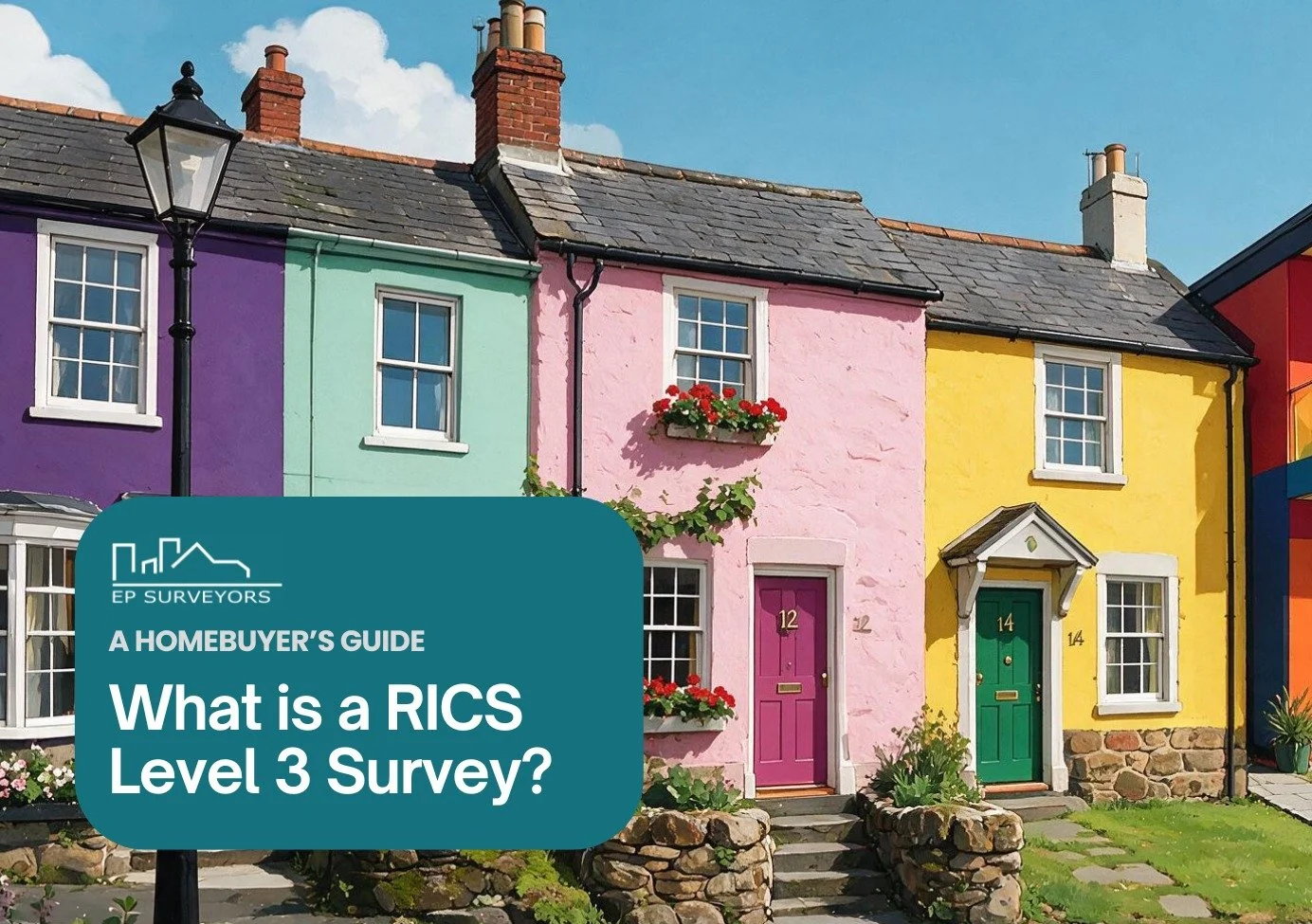
Purchasing an older cottage in Dartmoor, a historic Victorian home in Plymouth, or a property that needs substantial renovation is an exciting venture.
However, older or uniquely constructed homes come with character, history, and sometimes hidden structural challenges.
Before committing to a purchase, you need complete clarity on what lies beneath the surface.
The RICS Level 3 Survey (formerly known as a RICS Building Survey or Full Structural Survey) is the most comprehensive inspection available for residential properties. Here is everything you need to know about what a Level 3 Survey entails, when you should choose one over a Level 2 survey, and how it protects your investment.
What is a RICS Level 3 Survey?
A RICS Level 3 Survey is an in-depth, tailored evaluation of a property’s condition and structural integrity. Conducted by an experienced RICS (Royal Institution of Chartered Surveyors) chartered surveyor, it offers an extensive visual inspection of every accessible part of the building.
Unlike a Level 2 Survey, which provides a concise overview for conventional modern homes, a Level 3 Survey goes significantly deeper. It provides a detailed diagnosis of defects, explains the underlying causes of structural issues, outlines repair options, and highlights potential future consequences if repairs are ignored.
Key Takeaway: A Level 2 Survey tells you what is wrong. A RICS Level 3 Survey tells you why it is wrong, how serious it is, and how to fix it.
What Does a Level 3 Survey Cover?
The Level 3 Survey is thorough and investigative. The surveyor will inspect all accessible areas including lofts, cellars, sub-floor voids, roof spaces, outbuildings, and boundary walls.
What You Will Find in Your Report:
Structural Integrity Checks: Comprehensive checks for subsidence, settlement, severe movement, wall bulging, and lintel failure.
Damp and Timber Analysis: In-depth examination for rising damp, penetrating damp, dry rot, wet rot, and active woodworm infestation.
Roof and Concealed Spaces: Detailed analysis of roof structures, joists, timbers, chimneys, parapets, and valley gutters.
Repair Diagnostics: Clear explanations of cause, urgency, and practical options for remediation.
Maintenance Timelines: A projected timeline of future maintenance work needed to preserve the building over time.
Legal and Specialist Recommendations: Key issues for your conveyancer to investigate, alongside guidance on when to consult structural engineers or timber specialists.
Level 2 vs. Level 3 Survey Comparison
| Survey Feature | RICS Level 2 Survey | RICS Level 3 Survey |
|---|---|---|
| Ideal Property Age | Post-1919 (Standard modern build) | Pre-1919, historic, or listed buildings |
| Property Condition | Reasonable condition with minimal alterations planned | Poor condition, neglected, or major repairs needed |
| Construction Style | Standard brick, blockwork, and tile construction | Non-standard materials (cob, stone, timber frame, thatched roof) |
| Scope of Inspection | Overview of visible defects and condition ratings | In-depth structural inspection of accessible voids and grounds |
| Defect Diagnostics | Highlights defects without detailed cause analysis | Explores underlying causes, risks, and repair options |
| Future Planning | Basic maintenance guidance | Projected repair advice and ongoing maintenance schedules |
When Do You Need a Level 3 Survey?
You should choose a RICS Level 3 Survey if the property you are purchasing meets any of these criteria:
Age: Built before 1919 (Victorian, Edwardian, Georgian, or older).
Construction Type: Built using traditional or non-standard regional methods (such as Devon cob, granite, stone masonry, or timber frames).
Planned Alterations: You plan to knock down structural walls, convert the loft, build an extension, or change the layout significantly.
Visible Defects: You noticed signs of structural movement, severe damp, sagging rooflines, or cracking during your initial viewing.
Extensive Size: Large, complex, or heavily modified properties with multiple extensions or outbuildings.
Why Local Knowledge Matters for Older Devon Homes
Devon is home to some of the country’s finest historic architecture, but regional construction methods require local surveying expertise.
For instance, cob cottages require breathable lime renders and specific moisture-management strategies. Applying modern cement renders to a historic Devon property can trap moisture and cause severe internal decay. Similarly, coastal properties around Plymouth face salt air exposure, drove-driven rain, and distinct weathering patterns.
An independent local surveyor understands these regional quirks and can accurately diagnose whether an issue is historic settlement or an active, expensive structural fault.
Summary Checklist: Benefits of a Level 3 Survey
Uncover Deep-Seated Issues: Identify concealed timber rot, subsiding foundations, or failing roof structures.
Budget for Renovations: Plan realistic costs for necessary repairs before finalizing your mortgage or renovation budget.
Negotiate with Evidence: Use detailed repair findings to negotiate a price reduction or request that the seller resolves issues prior to exchange.
Protect Historic Value: Receive tailored advice on preserving traditional materials and maintaining listed or period features.
Ready to Inspect Your Prospective Home?
If you are buying an older, unique, or complex property in Plymouth, Devon, or the surrounding areas, EP Surveyors is here to give you complete peace of mind.
Request a Quote Today or speak with our qualified team to find out how a Level 3 Survey can safeguard your purchase.